Author: saqibkhan

  • How do you implement React routing?

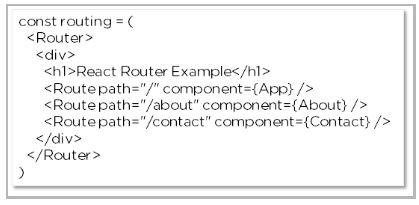
    We can implement routing in our React application using this method:

    Considering we have the components AppAbout, and Contact in our application:

    routing.

    Hope you have no doubts about this ReactJS interview questions article, in case of any difficulty, please leave your problems in the section below.
  •  How is React routing different from conventional routing?

    SNReact RoutingConventional routing
    1.Single HTML pageEach view is a new HTML file
    2.The user navigates multiple views in the same fileThe user navigates multiple files for each view
    3.The page does not refresh since it is a single fileThe page refreshes every time user navigates
    4.Improved performanceSlower performance
  •  Why do we need to React Router?

    • It maintains consistent structure and behavior and is used to develop single-page web applications. 
    • Enables multiple views in a single application by defining multiple routes in the React application.
  •  What is React Router?

    React Router is a routing library built on top of React, which is used to create routes in a React application. This is one of the most frequently asked react interview questions.

  • How is Redux different from Flux?

    SNReduxFlux
    1.Redux is an open-source JavaScript library used to manage application StateFlux is an architecture and not a framework or library
    2.Store’s state is immutableStore’s state is mutable
    3.Can only have a single-storeCan have multiple stores
    4.Uses the concept of reducerUses the concept of the dispatcher
  • What is the Flux?

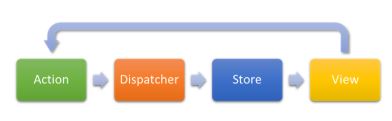
    • Flux is the application architecture that Facebook uses for building web applications. It is a method of handling complex data inside a client-side application and manages how data flows in a React application.
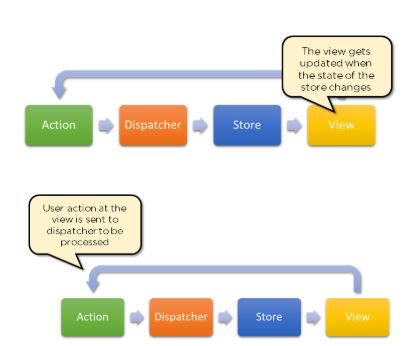
    • There is a single source of data (the store) and triggering certain actions is the only way way to update them.The actions call the dispatcher, and then the store is triggered and updated with their own data accordingly.
    • When a dispatch has been triggered, and the store updates, it will emit a change event that the views can rerender accordingly.
    action
  • What are the components of Redux?

    • Store: Holds the state of the application.
    • Action: The source information for the store.
    • Reducer: Specifies how the application’s state changes in response to actions sent to the store.
    action
  • What is Redux?

    Redux is an open-source, JavaScript library used to manage the application state. React uses Redux to build the user interface. It is a predictable state container for JavaScript applications and is used for the entire application’s state management.

  •  Explain the lifecycle methods of components.

    • getInitialState(): This is executed before the creation of the component.
    • componentDidMount(): Is executed when the component gets rendered and placed on the DOM.
    • shouldComponentUpdate(): Is invoked when a component determines changes to the DOM and returns a “true” or “false” value based on certain conditions.
    • componentDidUpdate(): Is invoked immediately after rendering takes place.
    • componentWillUnmount(): Is invoked immediately before a component is destroyed and unmounted permanently.

    Related Software Developer Interview Guides

    CodingJavaPython
    Java 8Node.jsJavaScript
    AngularSpring BootFrontend Developer

    ReactJS Redux Interview Questions

    Here are some ReactJS Interview Questions on the ReactJS Redux concept.

  •  What are the differences between class and functional components?

    Class ComponentsFunctional Components
    StateCan hold or manage stateCannot hold or manage state
    SimplicityComplex as compared to the stateless componentSimple and easy to understand
    Lifecycle methodsCan work with all lifecycle methodsDoes not work with any lifecycle method
    ReusabilityCan be reusedCannot be reused
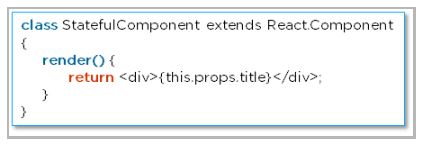
    • Class components example:
    class-components.
    • Functional components example:
    functional-components